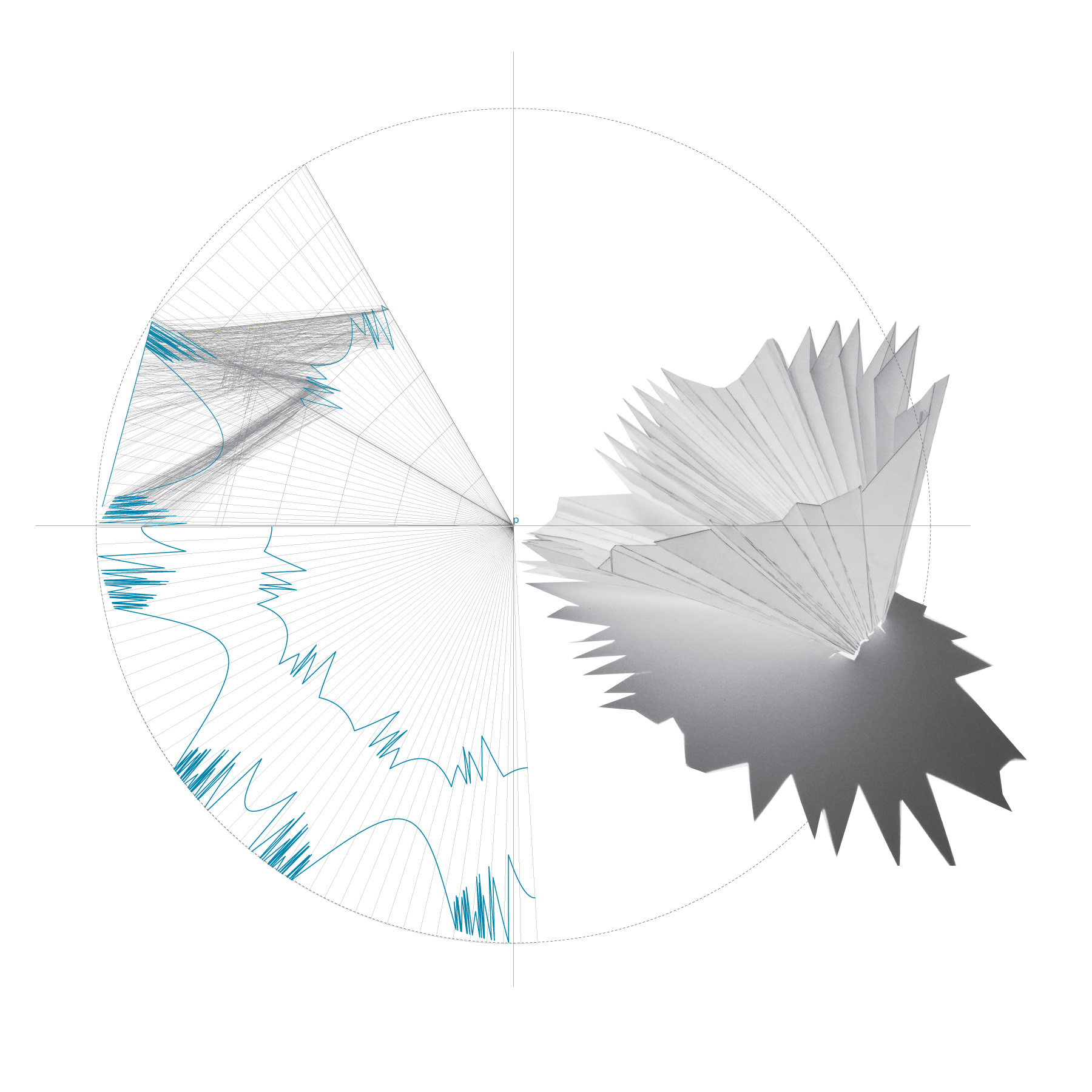


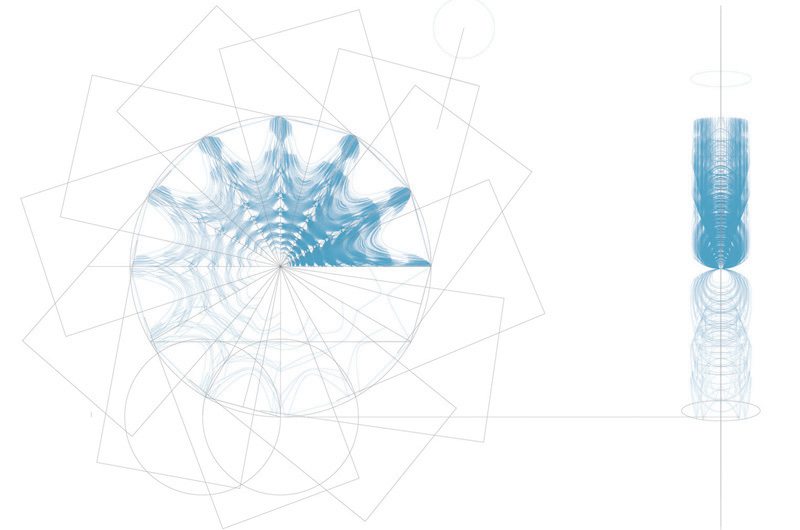
With increasing speed, geometries are discarded, stamped as obsolete and relegated to the scrap pile. While geometric thinking and formal experimentation tend to move in parallel with technological developments, is it possible to consider another alternative? The accompanying drawings and models consider the potential of cross-pollinating historical knowledge with contemporary digital techniques to propel the understanding of the role of geometry in architecture beyond a purely tool-based frame work. They rely on some of the precepts of projective geometry as a method of both exploration and potential fabrication. They depend upon a reversible chain of orthographic projection that inextricably binds three-dimensionally distorted curvature to its flattened point of origin.